Do you have too much stuff? Do you feel overwhelmed and suffocated by the sheer amount of things in your home? It’s not surprising – everything you own adds to the silent to-do list in your head.
Picture the scene…
You pop into the supermarket for milk, bread and a few things for dinner.
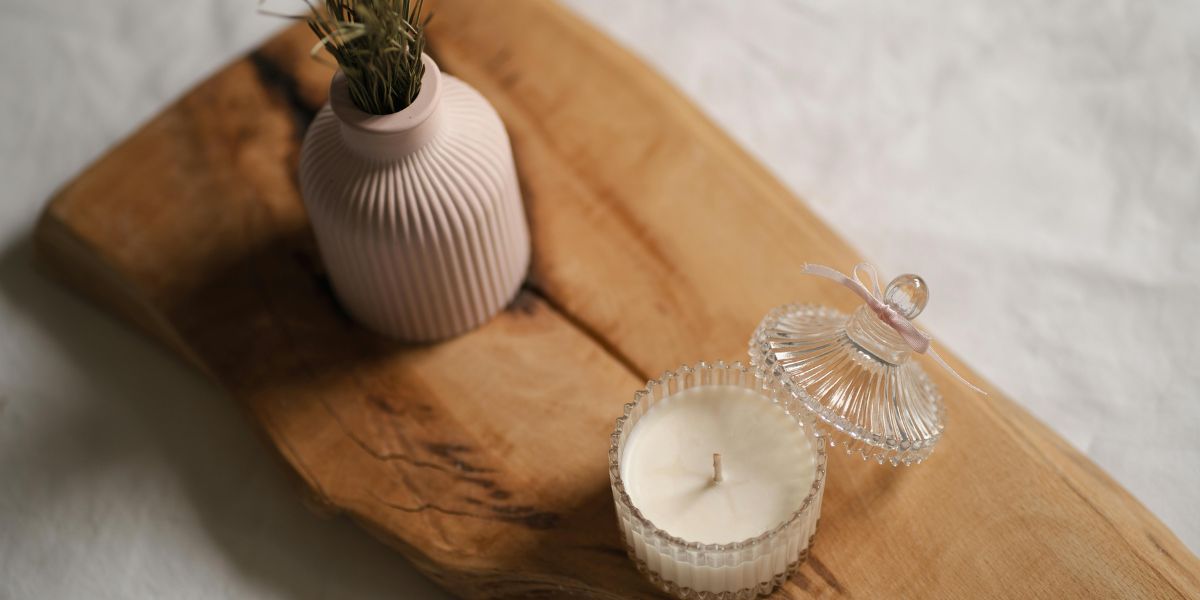
You’re just pushing your trolley through the automatic doors when you spot a lovely candle displayed beautifully on a seasonal stand. Into the trolley it goes. Then you pass the clothing section and notice a new pair of pyjamas. You could do with some new ones. And that jumper is exactly your colour…
By the time you reach the checkout, you’ve bought the groceries, plus a candle, a jumper, a pair of pyjamas and perhaps another little something you hadn’t even thought about buying when you walked through the door.
Sound familiar?
Shopping for food isn’t really just shopping for food anymore. Our supermarkets sell clothing, homeware, beauty products, books, toys, seasonal decorations and all sorts of tempting little extras. Add online shopping, social media advertising, emails dropping offers into our inboxes and the ease of buying something with a couple of taps on our phones, and we are surrounded by opportunities to consume.
None of those purchases seems particularly significant on its own.
It’s just a candle. Just another top. Just a cute mug. Just a little treat.
But every single thing we bring through our front door becomes something we now have to find a home for, organise, clean, maintain, move, tidy, remember, use and eventually make another decision about.
And that brings me to a simple idea I want you to think about differently:
Stuff = things to do.
The true cost of our stuff
When we buy something, we tend to think about its monetary cost in pounds and pence. But the price on the label is only the initial cost of bringing that item into our lives.
Everything we own also costs us space, time, energy and headspace.
Think about the beautiful silk blouse you bought for a special occasion. It was expensive, but rightly so. It’s beautifully made from natural fibres, and you loved it when you bought it.
But now it’s sitting at the bottom of your laundry basket because you’re worried about washing it. Every time you empty the basket, there it is.
“I really need to take that to the dry cleaners.”
You don’t do it, so back into the basket it goes.
Suddenly, that blouse isn’t simply taking up physical space. It has become an unfinished task. Every time you see it, it takes up a tiny bit of headspace and makes you feel guilty for not dealing with it too. And perhaps worst of all, you’re not actually enjoying the beautiful thing you spent your money on.
The same principle applies to so many of the things we bring into our homes.
That new candle needs somewhere to live. The children’s hand-me-downs you got from your neighbour need sorting, and you might not even think to declutter them first and keep only what you or your children actually like. A “must-have” kitchen gadget needs cupboard space. The free sample needs to be used. The picture needs to be hung. Your new clothes need to be washed, dried and put away.
Every possession has the potential to become another thing to do
And when you multiply that by hundreds, or thousands, of possessions in your home, it becomes much easier to understand why having too much stuff can make everyday life feel so much harder to manage.
And just to be clear, I’m not suggesting you need to become an extreme minimalist, live with bare shelves or get rid of the things you genuinely love and use. I love beautiful things too.
This is simply about recognising that everything you own requires something from you. So if you’re constantly exhausted by the amount of tidying, cleaning, laundry and organising your home requires, perhaps you don’t need to try harder.
Perhaps you’re simply trying to manage too much stuff.
How did buying so much become so normal?
The other part of this is just how incredibly easy it has become for things to accumulate without us really noticing.
It has become completely normal to buy things all the time.
An Amazon delivery arriving every other day. A parcel waiting on the doorstep when you get home. A quick order placed from the couch because something popped up on Instagram that looked useful.
Let’s face it, we can get pretty much anything we want at the click of a button.
And we’re being encouraged to buy constantly. Advertisers, retailers and influencers have become incredibly good at showing us things we didn’t even know existed five minutes ago and convincing us that somehow we need them.
You can be scrolling on your phone with absolutely no intention of shopping and, a few minutes later, you’ve bought the storage gadget, the make-up foundation that somehow knows how to match your skin tone, the kitchen accessory or the collagen supplement someone told you would ‘change your life’.
It’s actually quite mind-boggling when you stop and think about how much our shopping habits have changed in a relatively short space of time.
And none of this means you’re never allowed to treat yourself or buy something simply because you love it.
The problem is when buying becomes so automatic that we stop noticing how much is coming in.
A supermarket impulse buy here. A freebie there. A bargain. A hand-me-down someone thought your children might like.
Individually, they’re tiny decisions.
Collectively, they can become an awful lot of stuff.
And if you’re already struggling to manage everything you own, continually adding more means you’re trying to declutter at one end while the possessions keep pouring in at the other.
You can’t just focus on what’s going out
A few years ago, a post popped up on my Instagram feed that compared decluttering while continuing to buy more stuff, to brushing your teeth while eating an Oreo.
I laughed when I read it because it’s such a brilliant analogy, and I’ve remembered it ever since.
You can spend hours decluttering your wardrobe, clearing your kitchen cupboards, and filling bags for the charity shop, but if new things keep coming through the front door, keeping on top of your home will always feel harder than it needs to be.
Decluttering isn’t only about what leaves your home – you also need to pay attention to what you’re allowing in.
That doesn’t mean you stop shopping. It means allowing a little more space between wanting something and buying it.
Before you bring something new home, forget the usual questions you hear bandied about on social media:
“Do I love it?” (You’ll probably say yes.)
“Do I need it?” (You’ll probably say yes.)
“Can I afford it?” (You might say yes again!)
Instead, pause and ask yourself:
- Do I actually need this in my life right now?
- Do I already own something that does the same job?
- Where will it live?
- Am I willing to give it the time, space and care it requires?
Would I still want it if it wasn’t reduced, trending or being recommended to me right now?
“Do I actually need this in my life right now?” is the question I personally find most useful.
I ask myself this all the time when I’m tempted to buy something. More often than not, the answer is, “No, not right now.”
And that’s enough.
I remind myself that I can always come back for it if I change my mind. Most of the time, I walk away and never think about it again.
It’s such a simple question, but adding those two little words, “right now”, takes away that feeling that you’re denying yourself something forever.
You don’t have to agonise over every purchase. The aim is simply to move away from automatic consumption towards intentional consumption.
Because every time you decide not to bring something unnecessary into your home, that’s one less thing you’ll have to find space for, tidy, clean, organise, maintain or declutter six months from now.
Less stuff = less to manage
This is where having less really starts to pay you back.
Fewer possessions mean less to manage.
Less to tidy. Less to clean. Less laundry. Less to organise, maintain and mend. Less time spent moving things around just so you can clean underneath them. And less time searching for something you know you own but can’t actually find.
Your cupboards and drawers become easier to use because they’re not crammed full. You can see what you have. Things are easier to put away. And when you take the time to organise properly and give everything a home that makes sense for where and how you use it, maintaining that organisation becomes so much easier.
Does that mean your home will never get messy again? Of course not, you live there!
There will still be dishes in the kitchen, shoes by the door, washing waiting to be put away and everyday life happening around you.
But there’s a big difference between a home that has become temporarily untidy through everyday living and a home that contains more stuff than you can comfortably manage.
When you own less, and everything has a logical home, those little daily resets become quicker and easier. Instead of sacrificing half your weekend trying to get the house back under control, you can reset things as you go and get back to the things you actually want to be doing.
Because ultimately, the goal isn’t to spend your life maintaining a perfectly organised home.
It’s to create a calm home that’s easier to maintain, so you have more time for the good stuff.
But what if you already have too much stuff?
You might be reading this thinking, “That all sounds great, Jen, but you haven’t seen my house. I already have too much stuff, and I don’t even know where to begin.”
And I completely understand. When you look around and see everything that needs to be dealt with, it’s easy to feel overwhelmed, do nothing, and promise yourself you’ll start another day.
You don’t need to declutter your whole home this weekend.
You need a starting point, a simple plan and the support to keep going.
And that’s exactly why I created The Calm Home Reset.
The Calm Home Reset
The Calm Home Reset is my 8-week guided group programme, where we work through your home together, one room at a time. Instead of wondering what you should be doing next or trying to tackle everything at once, you’ll have a clear focus each week, practical guidance from me, live weekly support and a small group of women working towards the same goal alongside you.
By the end, I don’t want you to simply have filled a few charity bags.
I want you to understand how to make better decisions about your belongings, organise what remains in a way that makes sense and create simple systems that make your home easier to maintain going forward.
Because the goal isn’t a perfect home.
It’s a home with less to manage and more time to actually enjoy living in.
The next Calm Home Reset begins on Monday 14th September 2026, with just 12 places available.
The waitlist is now open, and waitlisters will be the first to hear when doors open and receive the best price available.
JOIN THE CALM HOME RESET WAITLIST
I can’t wait to welcome you inside.